Border Control
Canada
Goose
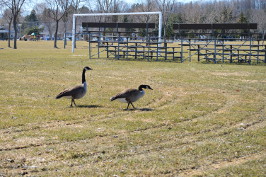
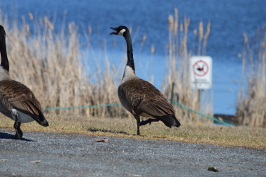
Often (but wrongly) referred to as the Canadian Goose is one of the largest species of waterfowl birds ranking only behind the swan in size. Although they are a migrating bird the Canada Goose in eastern southern Canada is considered a resident bird migrating only between the southern parts of the country and not much further than southern New York state. It is often confused with the smaller subspecies named the “Hutchins Goose” which typically migrates from northern climes to areas of Virginia.
Habitat
The Canada Goose, a protected species, is a beautiful and highly intelligent bird fast encroaching upon developed areas for habitat purposes through no fault of their own, creating challenges for both the species and humans alike.
Vast green spaces in the form of golf courses, parks, lakeside cottage communities, sporting fields etc…are very attractive feeding grounds and once the bird takes residence, removing it, if undesired hosts a huge challenge. Suffice it to say if geese inhabit a property, food is abundant along with a safe place to nest and protect its young from predators. The adult goose has few natural predators in eastern/southern Canada due to its ability to evade via the air or water and due to its size and tenacious nature when threatened by smaller predators such as fox.
Characteristics ans behaviour
Other characteristics
Often (but wrongly) referred to as the Canadian Goose is one of the largest species of waterfowl birds ranking only behind the swan in size. Although they are a migrating bird the Canada Goose in eastern southern Canada is considered a resident bird migrating only between the southern parts of the country and not much further than southern New York state. It is often confused with the smaller subspecies named the “Hutchins Goose” which typically migrates from northern climes to areas of Virginia.
Habitat
The Canada Goose, a protected species, is a beautiful and highly intelligent bird fast encroaching upon developed areas for habitat purposes through no fault of their own, creating challenges for both the species and humans alike.
Vast green spaces in the form of golf courses, parks, lakeside cottage communities, sporting fields etc…are very attractive feeding grounds and once the bird takes residence, removing it, if undesired hosts a huge challenge. Suffice it to say if geese inhabit a property, food is abundant along with a safe place to nest and protect its young from predators. The adult goose has few natural predators in eastern/southern Canada due to its ability to evade via the air or water and due to its size and tenacious nature when threatened by smaller predators such as fox.
Characteristics ans behaviour
- • Migrate north in Spring
- • Nest in early spring (March, April)
- • Will voraciously and aggressively protect nesting ground
- • Goslings hatch in Spring
- • Molting (developing flight feathers) during early/mid-summer
- • Adults lose flight feathers and ability to fly and molt during early/mid-summer at same time as goslings
- • Adults and young rest and feed during late summer/early Fall
- • Migration south occurs throughout Fall until waterways freeze
Other characteristics
- • Lifespan – Can surpass 20 years
- • Year 2 – Will find a lifelong mate
- • Will nest throughout their lifetime where they learned to fly
- • 5-6 eggs per brood but may reach up to 10
- • Prefers open areas with short grass and plants for feeding situated near waterways
- • An adult will consume approximately 4lbs of vegetation (plants, grass etc…) daily and will excrete approximately half of what it consumes.
819.620.8822 | info@bordercontrole.com
| Pascale Jannelle, owner
© Border
Contrôle